
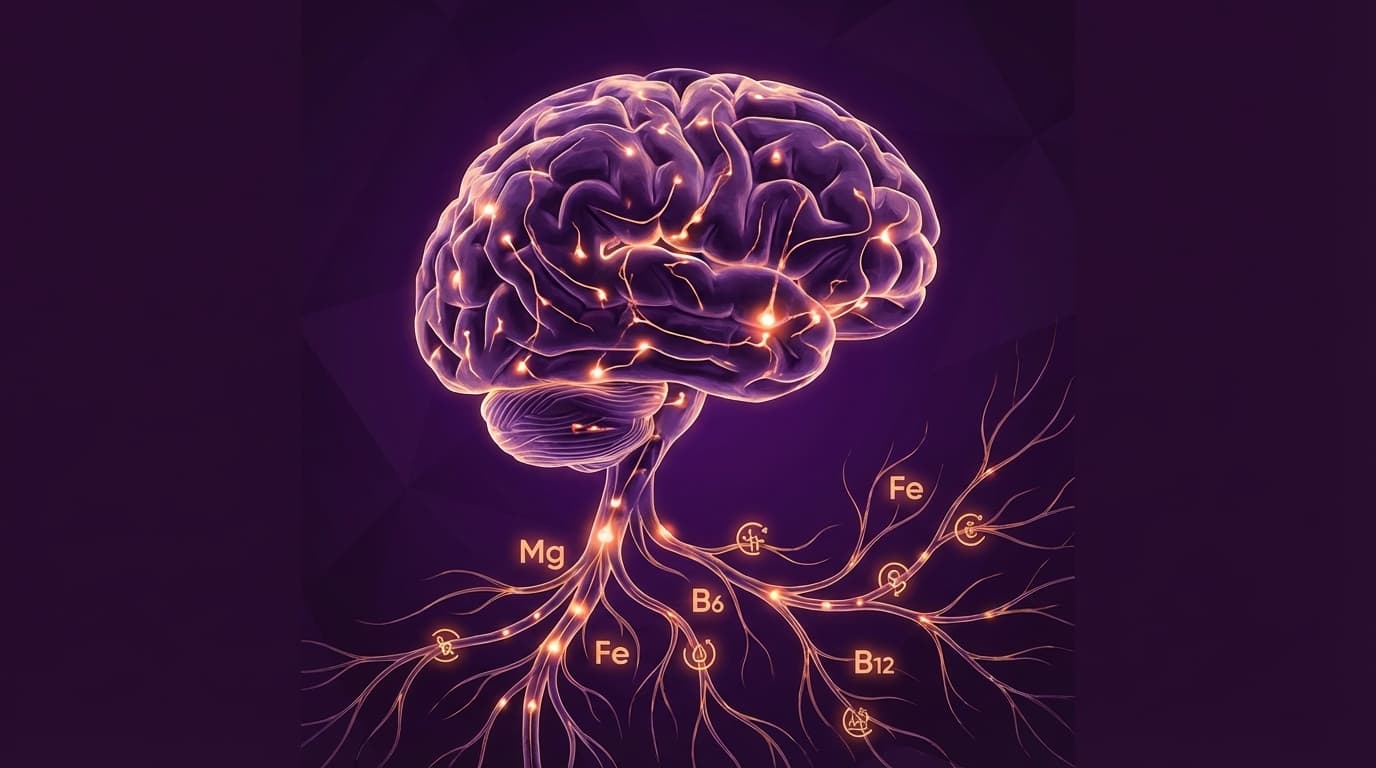
The nervous system – a complex network
Your nervous system handles communication in your body. Signals are sent through nerve cells, which need many different nutrients to work optimally. Magnesium, iron and B vitamins all play a central role in these processes.
Magnesium – the mineral for calm and relaxation
Magnesium is involved in more than 300 enzymatic reactions in the body. Magnesium is especially important for the nervous system, because it contributes to electrolyte balance, to normal functioning of the nervous system and to normal muscle function¹.
Chelated magnesium vs. ordinary magnesium
Not all forms of magnesium are absorbed equally well. Magnesium bisglycinate (chelated magnesium) is bound to the amino acid glycine. This has several advantages: better absorption in the gut, gentler on the stomach and fewer digestive complaints.
Iron – the oxygen carrier
Iron is essential for oxygen transport in the blood. The brain uses about 20% of the body’s oxygen, while making up only 2% of body weight. Sufficient oxygen transport is therefore very important for a healthy brain and a well-functioning nervous system.
Iron bisglycinate – the gentle alternative
Ordinary forms of iron, such as ferrous sulphate, can cause stomach complaints, constipation and nausea. Iron bisglycinate is bound to glycine, which makes it much gentler on the stomach while still being well absorbed.
B vitamins – the nerve vitamins
B vitamins play a central role for the nervous system. Vitamin B6 contributes to normal functioning of the nervous system and to normal psychological function¹. Vitamin B12 contributes to normal functioning of the nervous system and to normal psychological function¹. Folate contributes to the normal function of the immune system and to the reduction of tiredness and fatigue¹.
Active forms of B vitamins
EaseFormula™ uses methylcobalamin (the active form of B12) and Quatrefolic® (the active form of folate). The body can use these forms directly, without converting them first. This is especially important for people with genetic variants that affect how B vitamins are used.
Synergy
Magnesium, iron and B vitamins don’t work in isolation. They work together to support the health of the nervous system in different ways. For example, magnesium is needed to activate B vitamins, and iron and vitamin B12 work together in the formation of red blood cells.
References
¹ Authorised health claims under Regulation (EU) No 432/2012 as retained in GB law.